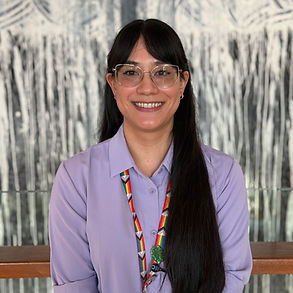
Dr. Diana Schuhmacher
What is your current research focused on?
My current research is focused on use of novel small molecule inhibitors and anti-fibrotic therapies as potential treatments for improving outcomes for patients with metastatic pancreatic ductal adenocarcinoma (PDAC), while also further elucidating the mechanisms driving metastatic PDAC to identify novel targets for therapy development.
What is your study background and when did you decide you wanted to be a research scientist?
I did my PhD at the University of Newcastle, focusing on the role of posttranslational modification of the protein phosphatase 2A family of serine/threonine phosphatases on cell-cell and cell-matrix adhesion. I decided I wanted to be a research scientist while pursuing my undergraduate degree in Biomedical Sciences, where I learned that I enjoyed working in a laboratory to better understand the mechanisms driving biology.
What attracted you to cancer research?
The wide scope of “problems” to be solved – so many different mechanisms go awry in cancer, including abnormal cell growth, changes to metabolism, genetic mutations and alterations, and cancer cell movement and metastasis. Understanding how these mechanisms go “wrong” can also help us understand how they are regulated under normal conditions too, furthering our knowledge about overall biology.
Why do you think research on metastases is important?
Due to the lack of specific symptoms, PDAC is often diagnosed at an advanced stage which unfortunately has limited treatment options at this point in time due to metastasis. Understanding the mechanisms driving metastasis will identify novel targets that we can use to develop new treatments to target and prevent metastases, hoping improving patient outcomes.
What do you find exciting about your research work?
The variety of techniques we use – we work closely with the Australian Pancreatic Genome Initiative, which gives us access to a biobank of well characterised patient-derived PDAC samples. We use state-of-the-art in vitro and in vivo techniques in combination with these patient-derived samples to investigate the use of novel small molecule inhibitors and anti-fibrotic treatments, as well as furthering our understanding of the mechanisms driving these cancers.
What do you hope to achieve in your research career?
During my research career, I hope to further our understanding of the mechanisms driving cancer and metastasis. I would also like to advocate for better communication and understanding of science to the wider community.
Garvan Institute of Medical Research
Email: d.schuhmacher@garvan.org.au
Bluesky: @drdianaschuhmacher.bsky.social
Twitter: @DrDiSchuhmacher